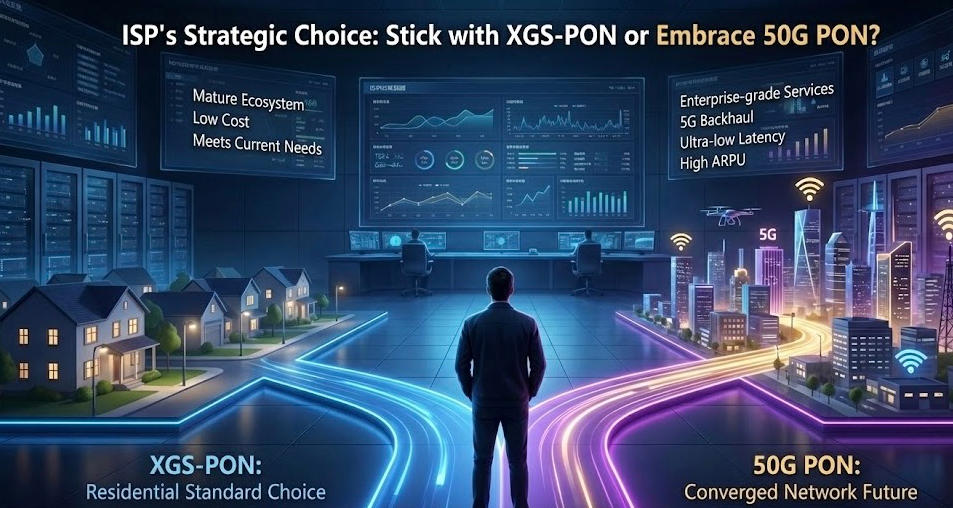
For the last five years, XGS-PON (10 Gigabit Symmetrical PON) has been the gold standard for fiber deployments. It offers a solid leap from GPON, providing enough headroom for 4K streaming and standard remote work.
However, the telecom landscape is shifting rapidly. The emergence of Wi-Fi 7, 8K immersive VR, and the convergence of enterprise and mobile networks onto a single Optical Distribution Network (ODN) brings a new challenger to the ring: ITU-T 50G PON.
As a network architect or procurement leader, you are faced with a critical decision: Do you continue to squeeze ROI out of XGS-PON, or is it time to pilot 50G PON? This guide breaks down the technical and business differences to help you decide.
Let’s look at the raw specifications. The jump from 10G to 50G is not just about speed; it’s about the underlying technology stack.
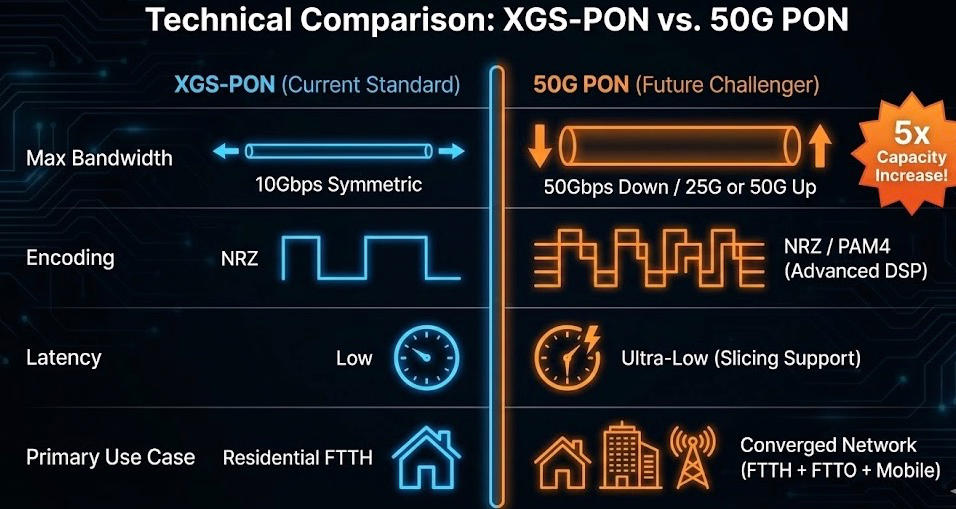
Feature | XGS-PON ITU-T6.9807.1 | 50G PON ITU-TG.9804 | The Superxon Takeaway |
Max Bandwidth | 10Gbps Symmetric | 50Gbps Down / 25G or 50G Up | 5x capacity increase for high-density areas. |
Encoding | NRZ (Non-Return-to-Zero) | NRZ / PAM4 | 50G uses advanced DSP to handle signal noise. |
Latency | Low | Ultra-Low (Support for Slicing) | Critical for Industrial IoT and 5G backhaul. |
Split Ratio | Typically 1:64 | 1:64 or higher (w/ high power budget) | Maintains existing ODN plant. |
Primary Use Case | Residential FTTH | Converged (FTTH + FTTO + Mobile) | One network for all services. |
XGS-PON is not obsolete. In fact, for "Greenfield" residential projects (new build-outs) targeting standard home users, it remains the most cost-efficient choice today. The equipment ecosystem is mature, chip costs are low, and 10Gbps shared among 64 users is sufficient for current Netflix/Zoom usage patterns.
Stick with XGS-PON if:
· Your primary subscribers are residential only.
· Budget constraints (CapEx) are your immediate priority.
· You do not plan to offer high-SLA enterprise leased lines on the same fiber.
While XGS-PON handles today, 50G PON secures tomorrow. The argument for 50G PON is driven by ARPU (Average Revenue Per User) and Convergence.
ISP profitability is moving away from simple "home broadband" to high-margin Enterprise Services (FTTO) and Wholesale Mobile Backhaul. XGS-PON lacks the dedicated bandwidth to guarantee Service Level Agreements (SLAs) for a business park while simultaneously serving hundreds of homes on the same tree.
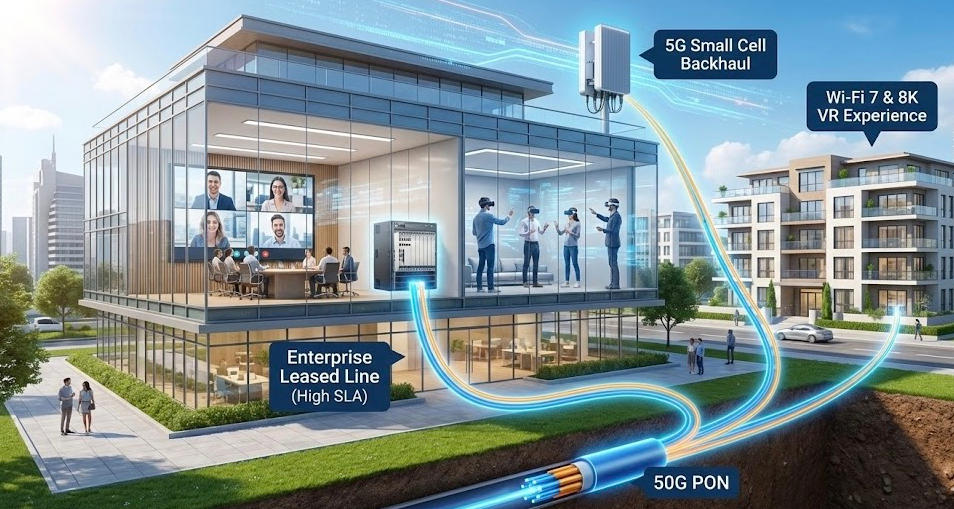
Move to 50G PON if:
· Convergence is Key: You want to run Mobile Backhaul (5G Small Cells) and Enterprise access on existing residential fiber.
· Wi-Fi 7 Bottlenecks: Upcoming Wi-Fi 7 routers can exceed 10Gbps throughput. XGS-PON will choke these devices; 50G PON unlocks them.
· Competitive Edge: You operate in a highly competitive market where marketing "The Fastest Fiber" wins customers.
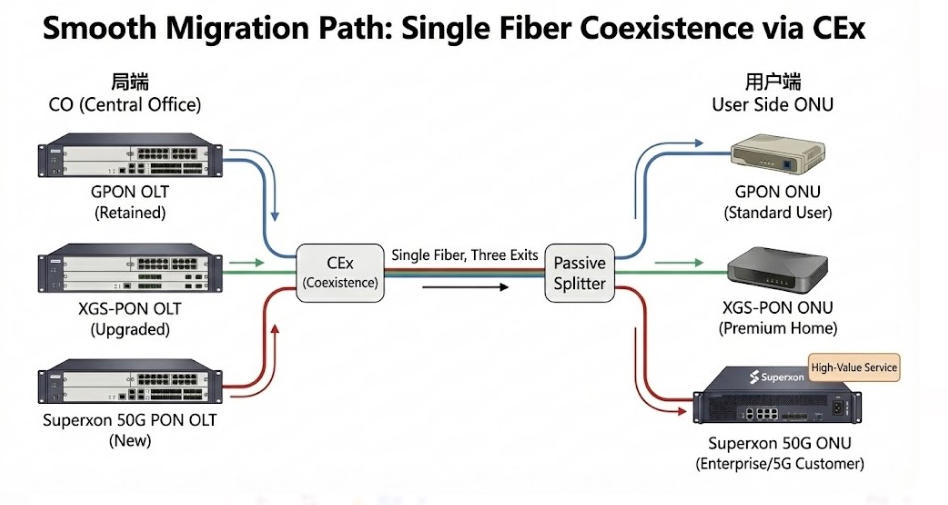
The beauty of the ITU-T standards is Coexistence. You do not need to rip and replace your existing network to deploy 50G PON.
By using Combo PON technologies or external CEx (Coexistence Element) filters, you can run GPON, XGS-PON, and 50G PON on the same optical fiber.
Step 1: Keep legacy users on GPON.
Step 2: Upgrade premium users to XGS-PON.
Step 3: Deploy Superxon 50G PON OLT cards in the central office and connect specific high-value enterprise clients with Superxon 50G ONUs.
This "Pay-as-you-Grow" model allows ISPs to introduce 50G PON specifically where high-margin revenue exists, without upgrading the entire network overnight.

XGS-PON is the workhorse of today, but 50G PON is the racehorse of the future. If your strategy involves expanding into enterprise connectivity or supporting 5G infrastructure, the planning for 50G PON must start now.
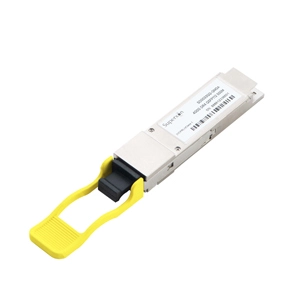
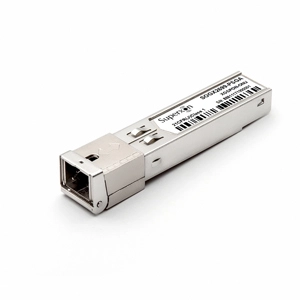
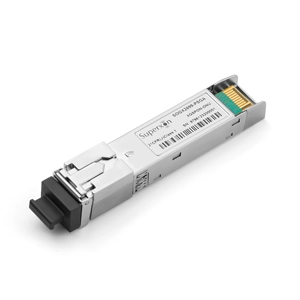
At Superxon, we provide the full ecosystem to bridge this gap—from [50G PON OLT QSFP-DD Transceivers] for your headend to [50G ONU QSFP28 Modules] for your enterprise edge.
Ready to evaluate the upgrade path?Our engineering team can help you calculate the link budget and coexistence strategy for your specific network topology.