When planning a fiber optic network, choosing between GPON and EPON is a critical decision. Both are popular fiber access technologies, but they differ in origins, protocols, and performance. Understanding these differences helps network operators select the optimal solution for their needs.
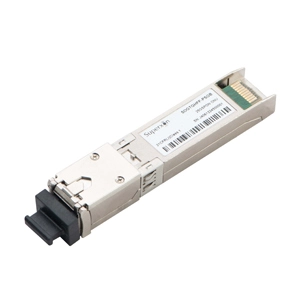
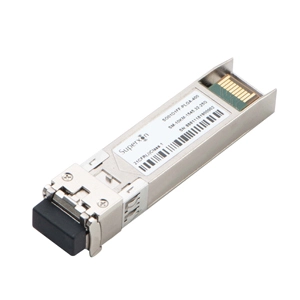
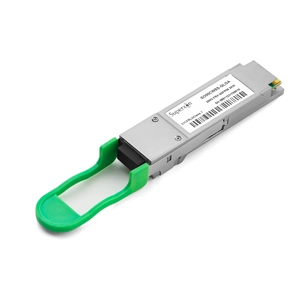
Superxon, a professional manufacturer of optical transceivers, provides high-quality GPON OLT transceivers, EPON OLT SFPs, and 10G EPON OLT modules to support both technologies.
EPON (Ethernet Passive Optical Network) is based on the IEEE 802.3ah standard. It essentially uses Ethernet protocol, making it a natural and cost-effective extension of LAN technology into the access network.
Standard: IEEE 802.3ah
Data Rate: 1.25 Gbps for both upstream and downstream (symmetrical).
Key Feature: Simplicity and seamless integration with IP/Ethernet networks.
An EPON OLT SFP is the optical module at the central office that communicates with multiple Optical Network Units (ONUs) at the user end.
GPON (Gigabit-capable Passive Optical Network) is defined by the ITU-T G.984 series standards. It was designed to be more efficient and support a wider range of services beyond pure IP data.
Standard: ITU-T G.984
Data Rate: 2.5 Gbps downstream and 1.25 Gbps upstream (asymmetrical).
Key Feature: Higher bandwidth efficiency and native support for multiple services like TDM.
A GPON OLT transceiver is the core module in a GPON system, managing data transmission to and from subscriber ONTs.
Here is a detailed comparison to help you understand their distinctions:
| Feature | GPON | EPON |
|---|---|---|
| Standard Body | ITU-T | IEEE |
| Data Rate | Down: 2.5 Gbps; Up: 1.25 Gbps | Symmetrical 1.25 Gbps |
| Line Coding | NRZ | 8B/10B |
| Usable Bandwidth | ~2.4 Gbps down, ~1.1 Gbps up | ~1 Gbps for both directions |
| Protocol & Multiplexing | GPON Encapsulation Method (GEM) | Ethernet |
| Management Protocol | OMCI | OAM / SNMP |
Bandwidth and Efficiency
GPON offers a higher raw downstream rate (2.5G vs 1.25G). More importantly, its efficiency is superior. EPON's 8B/10B line coding introduces a 20% overhead, leaving about 1 Gbps of usable data from a 1.25 Gbps line rate. GPON uses more efficient NRZ coding, delivering about 2.4 Gbps of usable downstream data, making it significantly better for bandwidth-heavy applications.
Service Support
GPON was designed as a "multi-service" platform, natively supporting IP, Ethernet, and even TDM (Time-Division Multiplexing) for legacy voice services. EPON is a pure Ethernet solution, which is excellent for data but requires additional adaptations (like VoIP) for other services.
The "better" technology depends entirely on your specific requirements.
Choose GPON if: You need higher downstream bandwidth and efficiency for applications like multi-dwelling units (MDUs), or require native support for a variety of services (data, voice, video) on a single platform. It is the dominant standard in many markets like North America and Europe.
Choose EPON if: You prioritize simplicity, deep integration with IP/Ethernet networks, and cost-effectiveness for straightforward data services. It has a strong foothold in markets like parts of Asia. The path to 10G EPON OLT also provides a clear symmetric 10G upgrade.
Both technologies have evolved to meet 10G demands.
10G EPON (IEEE 802.3av) offers symmetric (10 Gbps upstream and downstream) or asymmetric (10G down, 1G up) modes. It can coexist with standard EPON on the same fiber. Upgrading to a 10G EPON OLT is a straightforward path for existing EPON networks.
XG-PON (ITU-T G.987) offers 10 Gbps downstream and 2.5 Gbps upstream, coexisting with GPON on the same fiber.
Whether you are deploying GPON, EPON, or their 10G successors, Superxon delivers the high-performance, reliable optical transceivers your network depends on.
GPON OLT Transceivers: Fully compliant and interoperable for stable GPON network performance.
EPON OLT SFP Modules: Provide robust and cost-effective connectivity for your EPON infrastructure.
10G EPON OLT Modules: Enable a smooth transition to high-speed symmetric 10G services.
By choosing Superxon, you are selecting a partner committed to the quality and future-readiness of your network.