As bandwidth demands surge with 4K/8K video, cloud services, and 5G deployment, network operators are transitioning to 10G passive optical networks. The two leading standards—10G EPON and XGPON—offer distinct paths to 10G capabilities. Understanding their differences is crucial for making the right investment decision.
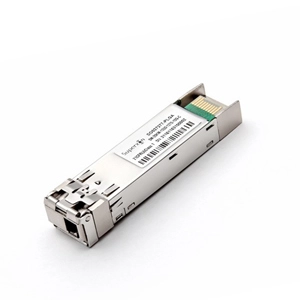
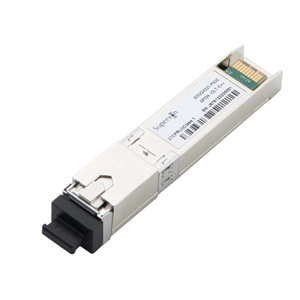
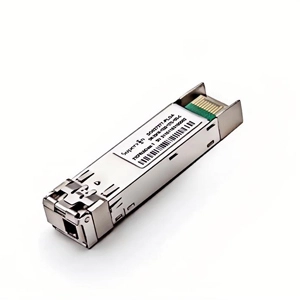
Superxon, a professional manufacturer of optical transceivers, provides comprehensive solutions for both technologies, including 10G EPON OLT modules, EPON OLT SFP, and XGPON OLT transceivers.
10G EPON (10-Gigabit Ethernet PON) is an evolution of the EPON standard, defined by IEEE 802.3av. It maintains Ethernet simplicity while dramatically increasing bandwidth.
Standard: IEEE 802.3av
Data Rates: Symmetrical 10 Gbps (or asymmetrical 10G/1G)
Key Advantage: Native Ethernet compatibility, smooth upgrade from EPON
A 10G EPON OLT can coexist with legacy EPON ONUs on the same fiber, using different wavelengths (1577nm for 10G downstream, 1270nm for 10G upstream). This makes upgrading existing EPON networks straightforward and cost-effective.
XGPON (10-Gigabit Passive Optical Network), defined by ITU-T G.987 series, is the natural evolution of GPON technology. Also called XG-PON, it provides a significant boost over its predecessor.
Standard: ITU-T G.987
Data Rates: 10 Gbps downstream, 2.5 Gbps upstream
Key Advantage: High downstream efficiency, native TDM support
An XGPON OLT coexists with GPON on the same fiber infrastructure using different wavelengths (1577nm downstream, 1270nm upstream), protecting existing investments while enabling 10G services.
| Parameter | 10G EPON | XGPON |
|---|---|---|
| Standard | IEEE 802.3av | ITU-T G.987 |
| Downstream Rate | 10 Gbps | 10 Gbps |
| Upstream Rate | 10 Gbps (symmetrical) | 2.5 Gbps (asymmetrical) |
| Line Coding | 64B/66B | NRZ |
| Wavelength | Down: 1577nm Up: 1270nm | Down: 1577nm Up: 1270nm |
| Coexistence | With EPON (1490nm/1310nm) | With GPON (1490nm/1310nm) |
Key Differences:
Symmetrical vs Asymmetrical Bandwidth
10G EPON offers symmetrical 10G bandwidth, ideal for applications requiring high upstream capacity like cloud storage, video conferencing, and 5G fronthaul
XGPON provides asymmetrical bandwidth (10G/2.5G), optimized for typical consumer broadband patterns
Heritage and Compatibility
10G EPON evolves from EPON standards, making it the natural choice for existing EPON networks
XGPON evolves from GPON standards, ideal for operators with GPON infrastructure
Protocol Efficiency
10G EPON uses native Ethernet framing, simplifying integration with IP networks
XGPON uses GEM framing, offering efficient encapsulation of multiple service types
Choose 10G EPON if:
You have existing EPON infrastructure
You require symmetrical bandwidth for business services or mobile fronthaul
Your network is heavily Ethernet/IP-based
You prioritize simplicity and cost-effectiveness for symmetrical services
Choose XGPON if:
You have existing GPON infrastructure
Your usage patterns are downstream-heavy (typical residential broadband)
You need to support legacy TDM services
You operate in markets where GPON ecosystem dominates
Whether you choose 10G EPON or XGPON, Superxon delivers reliable, high-performance optical transceivers to power your 10G network migration.
10G EPON OLT Modules: Enable smooth transition from EPON to 10G EPON with complete backward compatibility
EPON OLT SFP Transceivers: Maintain your existing EPON infrastructure with reliable, cost-effective solutions
XGPON OLT Modules: Upgrade your GPON network to 10G capabilities while protecting existing investments
Superxon's comprehensive 10G PON product portfolio ensures you have the right components for your specific network requirements, backed by rigorous quality testing and technical support.