
As global demand for bandwidth surges—driven by 8K video streaming, VR/AR applications, and enterprise cloud migration—Internet Service Providers (ISPs) are facing a critical inflection point. The transition from 10G PON (XGS-PON) to the next generation of fiber technology is no longer a "when" but a "how."
Enter 50G PON, the ITU-T G.9804 standard defined to carry the weight of the next digital decade.
For network architects and procurement leaders, the challenge lies in selecting the right optical interfaces that balance performance, density, and cost. In this technical deep dive, we explore why the 50G PON OLT QSFP-DD transceiver is emerging as the preferred form factor for next-gen Central Office (CO) deployments.
While XGS-PON (10G symmetrical) currently serves the market well, the roadmap for FTTx (Fiber to the Everything) requires looking 5-10 years ahead.
Latency Sensitivity: Industrial IoT and slicing applications require lower latency than current networks provide.
Backhaul Capacity: Using PON for 5G small cell backhaul demands significantly higher throughput.
Multi-Service Convergence: Operators are merging residential, enterprise, and mobile backhaul onto a single ODN (Optical Distribution Network).
To meet these demands, the industry has aligned on single-wavelength 50G PON as the definitive upgrade path.

When upgrading Optical Line Terminals (OLT), physical density and thermal management are paramount. This is where the QSFP-DD (Quad Small Form-factor Pluggable Double Density) shines compared to legacy form factors.
1. Superior Port Density
The QSFP-DD form factor allows for a higher density of ports on the OLT faceplate. For operators, this means maximizing the throughput per rack unit (RU) in the Central Office, directly impacting the ROI of real estate and power infrastructure.
2. Backward Compatibility Considerations
A key advantage of the QSFP-DD design in the context of 50G PON is its electrical interface capability. It supports the high-speed SerDes (Serializer/Deserializer) required for 50Gbps signaling (often using PAM4 modulation) while maintaining a form factor familiar to network engineers.
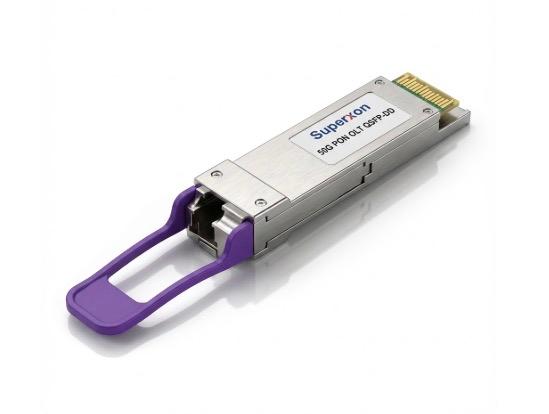
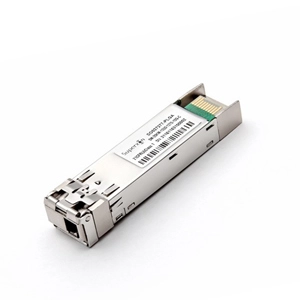
At Superxon, we understand that stability and compliance are the cornerstones of telecom infrastructure. Our 50G PON OLT QSFP-DD module is engineered strictly according to the ITU-T G.9804.3 standard, serving as a robust engine for your network upgrade.
Key Technical Highlights:
High-Speed Performance: Delivers symmetric or asymmetric 50Gbps downstream capabilities utilizing advanced EML lasers and APD receivers.
Link Budget: Optimized for Class N1/N2/E1 budgets, ensuring it works effectively over existing ODN infrastructure (up to 20km) without requiring expensive fiber re-cabling.
Thermal Efficiency: Designed with advanced heat dissipation techniques to operate reliably within the dense environment of a fully loaded OLT chassis.
Application Ready: Ideal for 50G-EPON and ITU-T 50G-PON applications, supporting coexistence with GPON and XG(S)-PON via external coexistence elements (CEx).
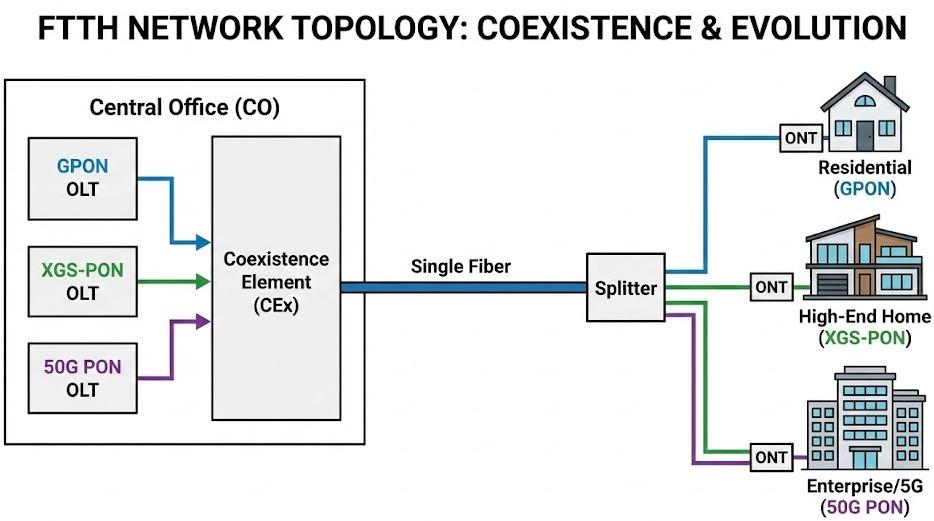
Note for Network Planners: Successful deployment of 50G PON requires careful calculation of the optical link budget. Our QSFP-DD modules are tested rigorously to ensure excellent receiver sensitivity and overload margins.
The leap to 50G PON is a significant technological stride. It requires components that are not just "compliant" but "optimized" for real-world ISP environments.
By choosing high-quality optical transceivers like the Superxon 50G PON OLT QSFP-DD, operators can ensure a smooth evolution path—protecting their investment in passive fiber plants while unlocking new revenue streams from ultra-broadband services.
Are you planning your 50G PON pilot or lab evaluation? [Contact Superxon's Engineering Team] today for the full datasheet and sample availability of our 50G OLT QSFP-DD transceivers. Let's build the next generation of connectivity together.