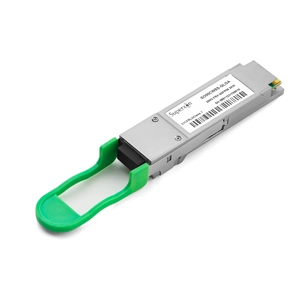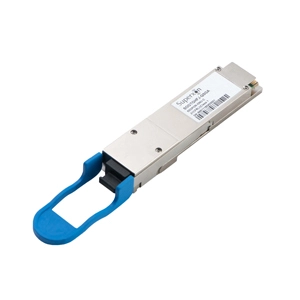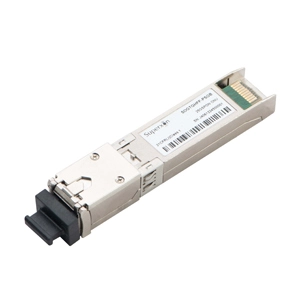
Several fiber-optic broadband network technologies have emerged to meet the ever-increasing need for high-speed connectivity. Three major standards, GPON (Gigabit Passive Optical Network), EPON (Ethernet Passive Optical Network), and XGPON (10-Gigabit-capable Passive Optical Network), each provide distinct benefits and functionality.
Understanding the distinctions between various optical transceiver technologies is critical for determining the best solution for certain network requirements. In this post, Superxon will look at the differences between GPON, EPON, and XGPON optical transceivers, emphasizing their essential features, applications, and advantages.
1. GPON (Gigabit Passive Optical Network): GPON is a widely deployed fiber-optic network technology that uses passive splitters to enable multiple users to share a single optical fiber. Key features of GPON optical transceivers include:
Speed and Bandwidth: GPON supports downstream speeds of up to 2.5 Gbps and upstream speeds of up to 1.25 Gbps, providing ample bandwidth for high-speed internet access, voice, and video services including GPON OLT transceiver and GPON OLT SFP module.
TDM (Time Division Multiplexing): GPON employs TDM to allocate time slots for upstream and downstream data transmission, ensuring efficient utilization of the available bandwidth.
Distance: GPON typically supports distances of up to 20 kilometers between the optical line terminal (OLT) and optical network units (ONUs), making it suitable for both residential and business applications.
Applications: GPON is commonly used in residential broadband access networks, fiber-to-the-home (FTTH) deployments, and enterprise networks where high-speed internet connectivity and multimedia services are required.
2. EPON (Ethernet Passive Optical Network): EPON, based on Ethernet standards, provides a cost-effective and flexible solution for delivering broadband services over optical fiber. Key characteristics of EPON optical transceivers include:
Speed and Bandwidth: EPON supports symmetrical downstream and upstream speeds of up to 1 Gbps, making it suitable for delivering high-speed internet access, voice, and video services.
Ethernet Compatibility: EPON is compatible with standard Ethernet protocols and equipment, allowing for seamless integration with existing Ethernet-based networks and services.
Simplicity: EPON SFP architectures are relatively simple and straightforward, with centralized control and management functions provided by the optical line terminal (OLT).
Applications: EPON is commonly used in residential broadband networks, multi-tenant buildings, and campus environments where Ethernet-based connectivity is prevalent.
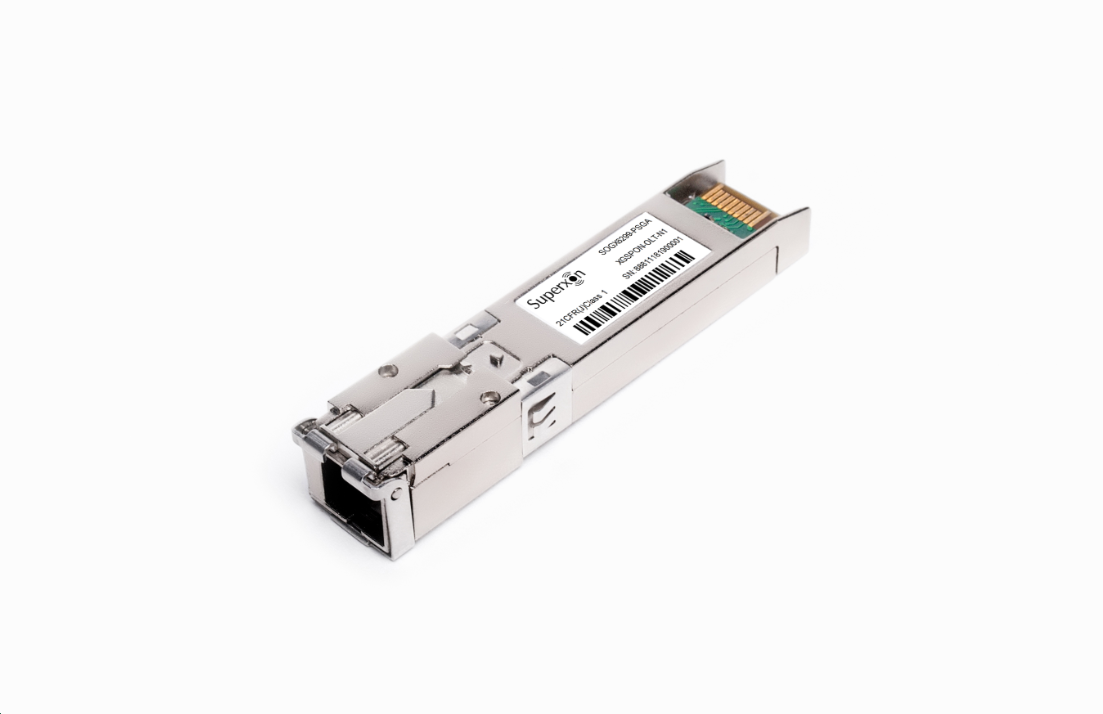
3. XGPON (10-Gigabit-capable Passive Optical Network): XGPON represents the next evolution of passive optical network technology, offering higher speeds and greater bandwidth capacity. Key features of XGPON optical transceivers include:
Speed and Bandwidth: XGPON supports downstream speeds of up to 10 Gbps and upstream speeds of up to 2.5 Gbps, providing significantly higher bandwidth compared to GPON and EPON.
Wavelength Division Multiplexing (WDM): XGPON utilizes WDM technology to enable multiple wavelengths on a single optical fiber, allowing for increased capacity and scalability.
Future-Proofing: XGPON OLT is designed to meet the growing demand for bandwidth-intensive applications and services, making it suitable for high-density residential, commercial, and mobile backhaul networks.
Applications: XGPON is primarily deployed in scenarios where ultra-high-speed internet access, 4K/8K video streaming, and cloud-based services are required, such as smart cities, data centers, and metro networks.
| Technology | Standard | Typical Speed | Key Feature |
| EPON | IEEE 802.3ah | 1 Gbps symmetrical | Ethernet-based architecture |
| GPON | ITU-T G.984 | 2.5 Gbps down / 1.25 Gbps up | Higher efficiency and multi-service support |
| XPON | Hybrid technology | Compatible with GPON and EPON | Dual-mode interoperability |
EPON uses native Ethernet frames and is widely used in cost-sensitive deployments. It typically provides symmetrical 1 Gbps bandwidth for upstream and downstream traffic.
GPON, on the other hand, supports higher downstream capacity and can transport multiple services such as Ethernet, voice, and video through encapsulation methods like GEM frames. Its downstream rate can reach 2.488 Gbps, making it popular in FTTH deployments and large ISP networks.
XPON is often described as a dual-mode solution supporting both EPON and GPON networks, allowing operators to simplify inventory and support multiple PON standards with a single ONU or optical module.
Many engineers searching for “gpon vs xpon” or “difference between gpon and xpon” often confuse the two technologies.
The key difference is that:
GPON is a specific PON standard defined by ITU-T.
XPON is a multi-mode technology that can operate in either GPON or EPON mode.
| Feature | GPON | XPON |
| Technology Type | Single PON standard | Dual-mode PON technology |
| Compatibility | GPON only | EPON + GPON |
| Deployment | ISP FTTH networks | Mixed network environments |
| Flexibility | Lower | Higher |
XPON devices automatically detect the OLT type and switch between EPON mode and GPON mode, which makes them highly useful for operators managing mixed PON infrastructures.
Because of this capability, many modern ONUs and optical transceivers are marketed as GPON/XPON compatible modules, enabling faster deployment and reduced hardware complexity.
GPON (Gigabit Passive Optical Network) and EPON (Ethernet Passive Optical Network) are two widely used PON technologies for delivering fiber broadband services. EPON is based on Ethernet standards, while GPON uses ITU-T protocols that support multiple service types including voice, video, and data.
The difference between GPON and XPON is that GPON is a single standard, while XPON refers to dual-mode technology that supports both GPON and EPON networks.
Each technology serves different deployment needs:
EPON – cost-effective Ethernet-based network
GPON – higher efficiency and bandwidth for FTTH
XPON – flexible compatibility with both GPON and EPON
Yes. XPON devices are designed to automatically detect the OLT type and switch between EPON and GPON modes, allowing operators to deploy a single ONU or optical module across multiple network standards.
Conclusion:In summary, GPON, EPON, and XGPON optical transceivers from the professional optical transceiver company offer distinct advantages and capabilities tailored to different network requirements and deployment scenarios. While GPON and EPON provide cost-effective solutions for residential and enterprise broadband access, XGPON delivers unparalleled speed and bandwidth for next-generation applications and services. By understanding the differences between these optical transceiver technologies, network operators and service providers can make informed decisions when designing and deploying fiber-optic broadband networks to meet the evolving needs of end-users.